Engineered for Winners: Our Development Tiers.
A Structured Lens Through Mobile Engine Tiers.
At Bryquendalis Studios, we don't believe in generic development. Every project in the online game space requires a specific structural chassis. Whether you are validating a new mechanic or building a cross-platform tablet epic, our tiers provide the transparency you need to align your vision with technical reality.
We treat the smartphone as an architectural site. Our comparison framework breaks down the complexity of mobile engineering into digestible specifications—covering everything from core engine stress tests to the final polish of a high-fidelity environment.
Architectural Integrity
We build on performance-hardened foundations, ensuring that your games maintain stability across 12+ distinct hardware profiles.
Technical Precision
Our metrics aren't guesses. We use documented stress tests to identify the hardware limit of target tablet and phone devices early.
Comparison Ledger
Detailed contrast between our Prototype, Standard, and Enterprise engagement models reviewed for July 2026.
| Structural Layer | Prototype & Mechanics | Standard Production | Enterprise Full-Cycle |
|---|---|---|---|
| Core Engine Optimization Depth | Targeted stress test for a single core mechanic. High performance, narrow scope. | Full environment validation. Optimized for mid-tier smartphone hardware. | High-fidelity shaders and custom lighting engines. Multi-threaded tablet optimization. |
| Platform Scope Cross-Device Reach | Single Target OS (typically iOS or Android). | Bilingual cross-platform deployment. Standard mobile UI scaling. | Adaptive UI for Phone and Tablet. Parallel development for unified backend ecosystems. |
| Network Layer Connectivity Policy | Local-only or mock-backend validation for mechanic proofs. | Standard online game server protocols. Encrypted player data storage. | Global regional server clusters. Robust anti-cheat architecture and real-time live ops. |

Physical device testing across 12 specific hardware profiles ensures launch-day reliability for all games.
Validating Performance at the Edge.
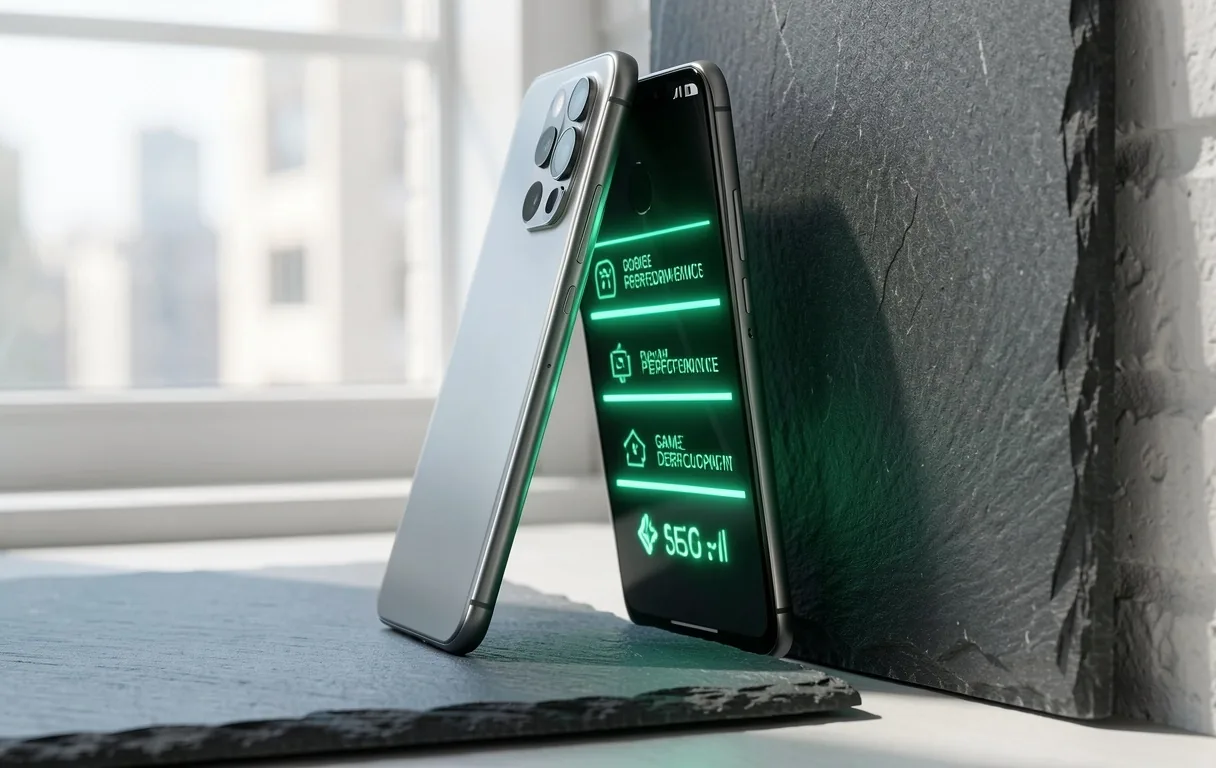
The difference between a standard app and an immersive online game lies in the delta between code and hardware capability. Our testing protocols aren't theoretical; we use physical labs at 450 W Georgia St, Vancouver, to push every tablet and phone variant to its limit.
-
Thermal Throttling Analysis: We monitor CPU/GPU performance during long play sessions to prevent frame-rate drops.
-
Input Latency Debugging: Synchronizing high-fidelity graphics with precise touch controls on varied screen digitizers.
Navigating Your Selection
Native or Cross-Platform?
Choose native architecture when your game requires high-fidelity lighting and complex physics. Cross-platform is optimal for broader market reach on a tighter timeline.
Prototype or Turnkey?
If you are pitching a concept to investors, our Prototype tier provides technical proof-of-concept. Full-Cycle is for market-ready releases with live-ops support.
Maintenance Scales
Our Enterprise contracts include extended content update plans and marketing integration to support the longevity of successful winners in the mobile store.
Architectural Milestones
Engine Selection & Stress Test
We identify hardware limits for target devices. Clients should prepare target hardware lists and expected performance benchmarks for this phase.
Immersive Prototype Batch
Initial structural pass of the game's core loop, ensuring that mechanics feel native to tablet touch-points before aesthetic finalization.
Final Hardware Validation
A rigorous final test cycle across all target Android and iOS profiles at our Vancouver facility to ensure performance reliability at launch.
Encrypted Server Architecture for High-Stakes Immersion.

Ready to Engineer Your Vision?
Select your point of entry. Whether you need a technical specimen to prove a mechanic or a full-scale engine build, we have the architectural expertise to deliver.
Contact Gateway